Tempivo and RISE Monitor Water Hygiene and Legionella Risk in Kista | CitCom TEF
Tempivo AI measures water temperature and legionella risk in RISE's canteen in Kista. Read about the partnership with RISE and CitCom TEF and how the non-invasive sensor delivers s...

By
Thibault Helle
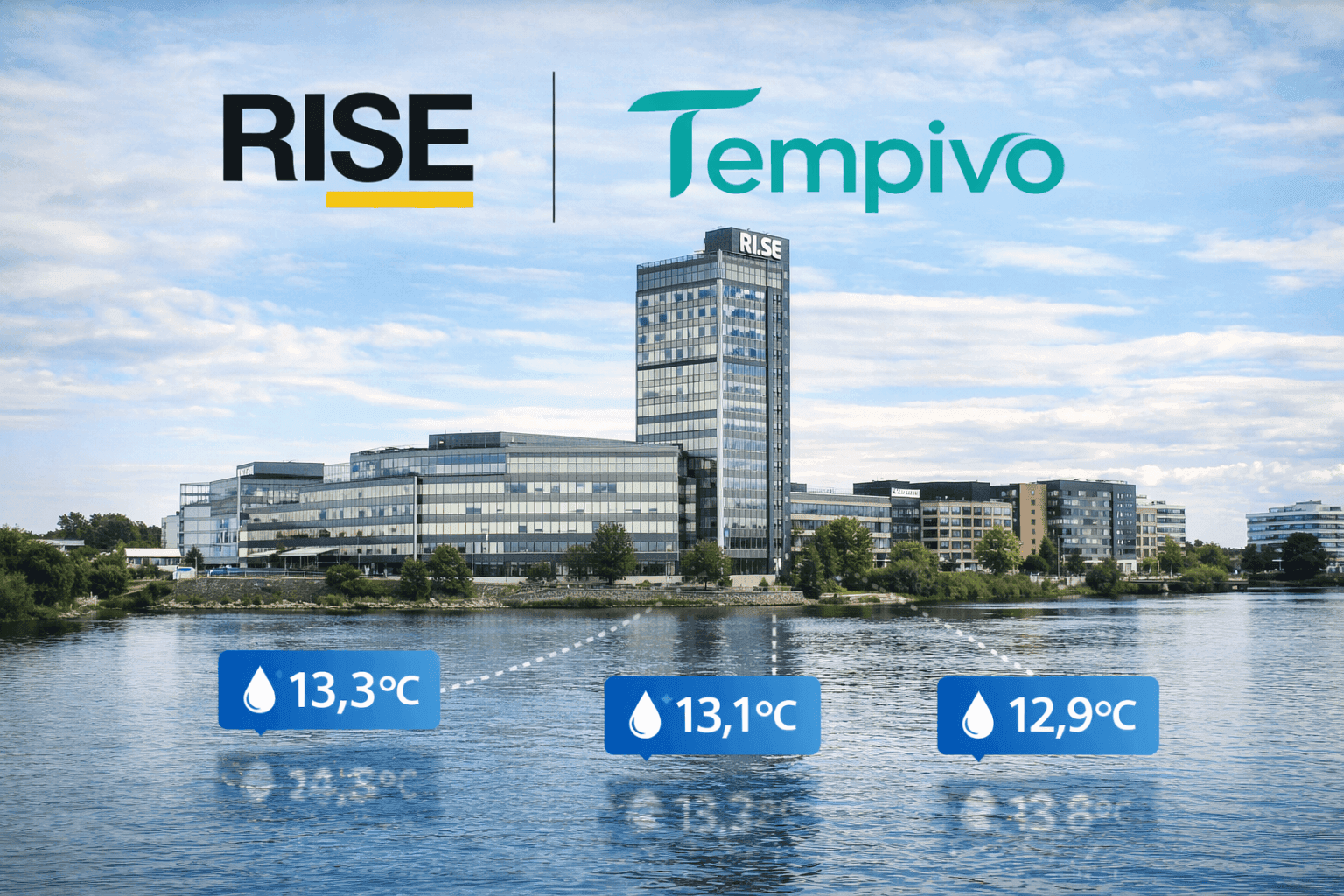
RISE and Tempivo have started a partnership to monitor water hygiene using sensor data and AI at RISE's headquarters in Kista. In the canteen used by RISE staff, Tempivo's sensor measures temperature changes in the water installation from the outside of the pipe and helps detect legionella-related risks in good time. The collaboration takes place within CitCom TEF (Test and Experimentation Facility), with Alex Jonsson at RISE as contact person (alex.jonsson@ri.se). This article explains why it matters, how the solution works, and what benefits it brings.
Why Water Hygiene and Legionella Matter
Legionella is a bacterium that thrives in water systems and can cause serious respiratory infections, including Legionnaires' disease, when people inhale fine water droplets (e.g. from showers or cooling towers). Risk increases where water sits stagnant, where hot water temperature is too low, or where cold water becomes too warm. Office buildings, canteens and kitchens – like at RISE's headquarters – often have many outlets used unevenly. Some taps or branches may have poor circulation or long idle periods (weekends, holidays), which increases the need for systematic monitoring.
Unmonitored water installations can develop bacteria such as legionella, especially where water is stagnant or does not reach sufficiently high temperatures. Sweden's national building regulations (BBR) set clear requirements for hot tap water to reduce this risk. For example, there must be at least 50 °C at the tap (e.g. shower or kitchen tap), at least 60 °C in the hot water heater/accumulator, and at least 50 °C in the hot water circulation (DHW) throughout the system. Hot water should also reach about 50 °C within a reasonable time after the tap is opened (typically within about one minute), while the temperature at the tap should normally not exceed about 55 °C to reduce scalding risk. For cold water, the temperature should not exceed 24 °C after eight hours of stagnation. Complying with these requirements and documenting that you do so often relies on manual measurements and logs – which is time-consuming and easy to postpone or forget. Continuous measurement with sensors and clear reporting supports both safety and BBR documentation.
Tempivo AI – Non-Invasive Measurement and Real-Time Insights
Tempivo offers a solution for smart water hygiene. The sensor is mounted on the outside of the pipe and measures temperature changes without drilling or cutting into the pipework. That means simple installation, minimal impact on existing plumbing, and no need to drain or shut off lines for long periods. With AI, data is analysed in real time so that water activity (e.g. flow from a tap or dishwasher) can be identified automatically – giving both a picture of usage patterns and early warnings of abnormal temperatures or stagnant water.
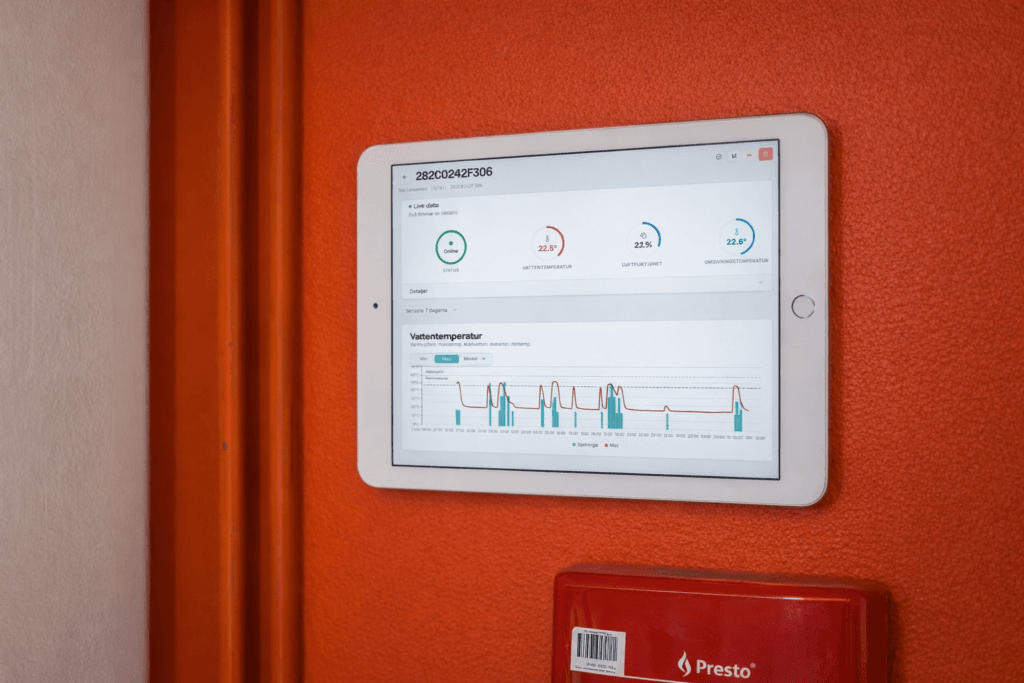
At RISE's office in Kista, data from the kitchen water equipment – including tap and dishwasher – is shown in the same overview a facility manager can use: current status, history, and AI-generated insights. On screen, you see the same kind of dashboard available for operations and maintenance: which outlets are used, when temperature deviates from targets, and what actions may be needed. That makes it possible to spot deviations early, reduce manual checks, and automate documentation in line with BBR. In short: unmonitored water systems can develop bacteria such as legionella; continuous measurement helps detect risks early, cut manual checks, and automate BBR documentation. The result is safer water, less manual work, and better support for reports and decisions.
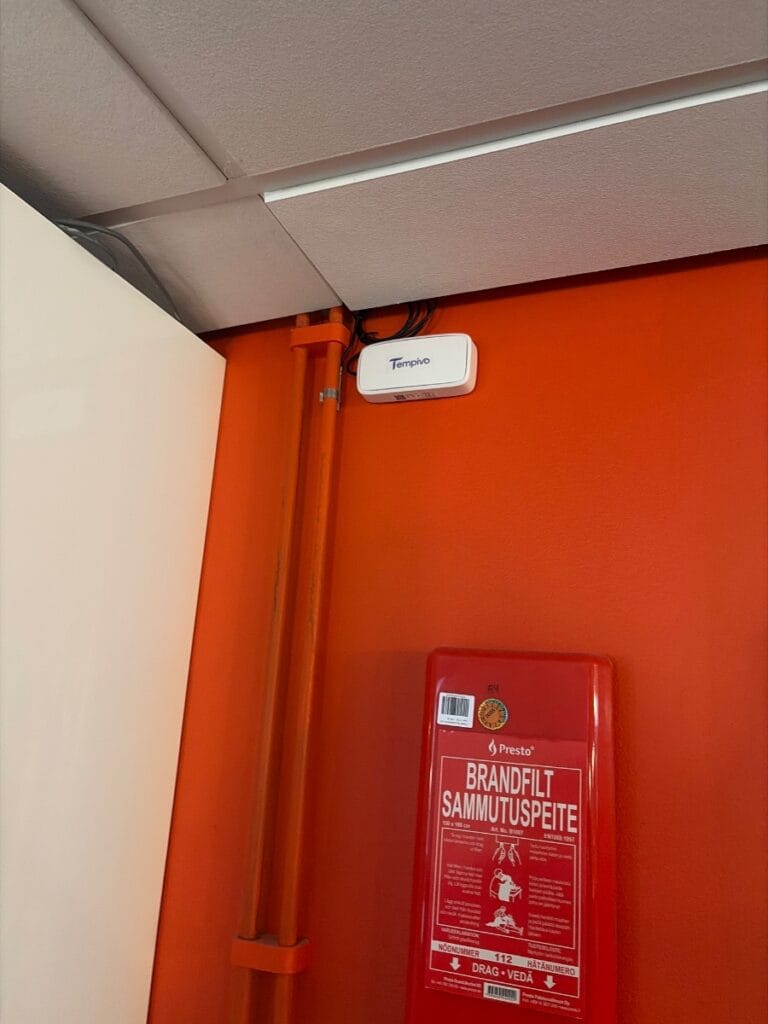
The Installation at RISE HQ in Kista
The sensor is installed in RISE's kitchen/canteen at headquarters in Kista – a place where water equipment is used daily by RISE staff, from the kitchen tap to the dishwasher. The unit sits discreetly on the wall near the water pipes and ceiling, so it does not get in the way of daily use while still capturing relevant temperature changes in the lines. By measuring from the outside of the pipes, you get a continuous view of how water is used and whether temperatures stay within recommended ranges. That gives RISE better grounds to ensure water hygiene in the canteen and to document measures and routines, while the installation also serves as a concrete test and demonstration environment within CitCom TEF. Visitors and partners at RISE in Kista can see both the physical installation and, when displayed, the same overview on screen – making the site a strong context for discussing smart water hygiene and collaboration between research, the public sector, and SMEs.
CitCom TEF – Test and Experimentation Facility for Smart Cities
CitCom TEF (Test and Experimentation Facility) offers test and experimentation environments for AI startups and small and medium-sized enterprises that want to test or experiment with AI models and/or robots for smart and sustainable cities and communities. The TEF has 32 partners in 11 member states – including research and technology organisations (RTOs), cities, universities and companies. The offer includes subsidised access to both virtual and physical test environments, making it possible for smaller players to validate their solutions in real buildings and infrastructures without bearing the full cost themselves.
Tempivo is a participant in CitCom TEF, and the collaboration with RISE in Kista is a clear example of how a physical test environment is used to validate measurement of water temperature and use in a real setting – in this case an office canteen with a kitchen. It provides both technical validation of the sensor and AI models and a concrete place to showcase results to other partners and stakeholders. For questions about testing or experimenting within CitCom TEF, AI startups and SMEs can contact Alex Jonsson at RISE: alex.jonsson@ri.se. For questions about measuring water temperature and use, you can contact Thibault Helle at Tempivo (SME).
BBR Requirements at a Glance – Handy Reference
To keep the regulatory picture clear when discussing water hygiene and legionella, the following summary can be used as a reference:
- At least 50 °C at the tap (e.g. shower or kitchen tap). → BBR 6:622
- At least 60 °C in the hot water heater/accumulator to reduce legionella risk. → BBR 6:622
- At least 50 °C in hot water circulation (DHW) across the whole installation. → BBR 6:622
- Hot water should reach about 50 °C within a reasonable time after the tap is opened (typically about 1 minute). → BBR 6:62
- Temperature at the tap should normally not exceed about 55 °C to reduce scalding risk. → BBR 8:4
- Cold water temperature should not exceed 24 °C after 8 hours of stagnation. → BBR 6:622
Tempivo's solution helps facility managers meet these requirements through continuous measurement and clear reporting, instead of manual spot checks alone.
Who Benefits from Continuous Water Monitoring?
Continuous measurement of water temperature and use is especially valuable in buildings with many outlets and varying use: offices, schools, hospitals, hotels, care homes and canteens – just like at RISE. Some taps or branches may be used rarely while others are used many times a day. By combining sensor data with AI, you get not only a picture of current temperature but also of usage patterns, which supports both risk assessment and planning of flushing routines and maintenance. Building owners and managers get better support to comply with BBR and to document measures during inspections or audits.
Benefits for Buildings and for RISE
In summary, the solution delivers safer water through early detection of risks, less manual work through fewer manual checks, and better support for reports and decisions. For RISE, the installation in Kista means both improved water hygiene in the canteen for staff and a concrete case study within CitCom TEF that can be shown to partners and visitors – for example as on-site display or digital information. Being able to point to a real installation and a clear link to BBR requirements and legionella prevention strengthens the message of smart and sustainable water management in public and commercial buildings.
Contact and Next Steps
- CitCom TEF and test/experimentation: Alex Jonsson, RISE – alex.jonsson@ri.se
- Water temperature and usage measurement, Tempivo: Thibault Helle, thibault[at]cms.https://cms.tempivo.com (SME Tempivo)
If you would like to know more about how Tempivo can support your organisation with smart water hygiene and BBR documentation, or if you are interested in taking part in CitCom TEF as a startup or SME, the contacts above are the right place to start.